

First UNV Guard Deployment: Enterprise VMS Built for Real Operations | StoneWyck


There's a class of surveillance problem that off-the-shelf NVRs simply cannot solve. Not because they record badly, but because they were never designed for what happens above the recording layer the management, the integration, the scale, the multi-site coordination, the operator workflows that turn raw video into a real security operation.
That gap is what Uniview's UNV Guard platform was built to fill.
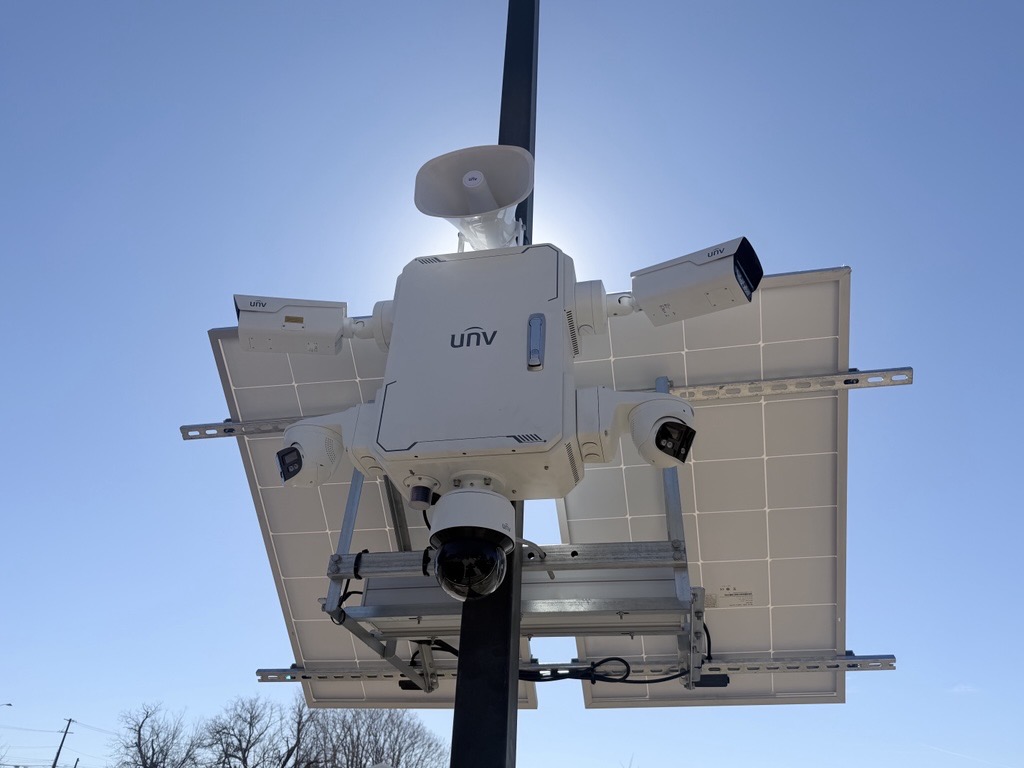
And we're proud to share that StoneWyck has completed the first field deployment of UNV Guard in the United States, configured with 448TB of enterprise storage and integrated into two of the largest projects in our recent portfolio: the custom solar-powered camera trailer build for TenSeven Security and our professionally monitored surveillance infrastructure project.
This post walks through what UNV Guard is, why it was the right call for these deployments, and what 448TB of enterprise video storage actually means in practice.
What UNV Guard Actually Is
It's important to start here, because "VMS" gets thrown around loosely. UNV Guard is not an NVR with extra software. It's a different category of product entirely.
UNV Guard is Uniview's enterprise video management platform a comprehensive security management system that integrates video surveillance with access control, video intercom, alarm management, and personnel/data management under a single distributed architecture. Where an NVR is built to record from a fixed roster of cameras at a single site, UNV Guard is built to manage the security operation across an entire organization multiple sites, multiple device types, multiple user roles, and the workflows that connect them.
In practice, that means UNV Guard handles:
- Centralized video management across distributed NVRs, cameras, and storage servers
- Access control integration so door events and video are unified, not separate platforms
- Alarm and event correlation linking what happens at a door, on a camera, and through a sensor into a single timeline
- Role-based operator access with manager and staff authority levels, audit trails, and task assignment
- Third-party integration through open APIs and customization paths
- Distributed deployment that scales horizontally rather than relying on a single monolithic box
That last point is what separates enterprise VMS from enterprise NVR. The system isn't constrained by the limits of a single chassis. It scales with the operation.
Why the First Deployment Was Worth Pursuing
Being first on a platform isn't a marketing exercise it's a commitment. It means working directly with the manufacturer through the deployment, troubleshooting at a level that doesn't exist in any documentation yet, and accepting that you're the team responsible for proving the architecture in the field.
We took it on for three reasons:
The platform fills a real gap in our customers' operations. Our customers like TenSeven Security and the professional monitoring operation we built infrastructure for aren't running a single building with a handful of cameras. They're running active security operations across multiple sites, with growing camera counts, expanding service areas, and the need to unify access events, video, and alarm response. They were already running into the ceiling of what a traditional NVR architecture could support. UNV Guard was purpose-built for exactly that scale.
Direct manufacturer partnership de-risks the deployment. Working hand-in-hand with Uniview's engineering team not relying on a distributor reading from a script meant we had the technical depth to deploy confidently. That's a partnership we've built over years of UNV deployments.
It positions our customers ahead. Our customers don't want to be running last decade's surveillance architecture. Deploying UNV Guard now means they have a platform that scales with them for years to come, instead of facing a forklift upgrade in eighteen months.
The Storage Configuration: 448TB and Why
Let's talk about the storage layer, because it's the spec that tends to make people stop scrolling.
The server was configured with sixteen 28TB enterprise drives 448TB of raw capacity. After RAID protection (RAID 6 across the array), usable capacity lands around 364TB, with two-drive failure tolerance.
Some context for what that actually represents:
- A typical small business surveillance system might use 4-16TB of storage and retain 30-90 days
- An enterprise multi-site deployment commonly runs 50-200TB
- 448TB raw / 364TB usable puts this deployment firmly in the hyperscale tier the territory of large industrial campuses, multi-location operators, and security service providers
Why this much storage? Three reasons:
1. Long retention windows. Across the camera footprint these projects feed, retention is measured in months, not days. Legal, compliance, and forensic review use cases all benefit from extended retention and once you've built the infrastructure, the marginal cost of keeping more footage is trivial compared to the value of having it when you need it.
2. High-resolution footage at high frame rate. Modern enterprise surveillance is moving toward 4K and 12MP cameras running at 25–30fps. The bitrate of that footage adds up quickly. The storage budget on this deployment was built around the cameras of the next five years, not the cameras of the last five.
3. Headroom for growth. TenSeven's operation is expanding. So is the monitored infrastructure customer's. The storage capacity wasn't sized to today's camera count it was sized to where these operations will be three years out, with substantial headroom past that. The platform should scale with the customer, not bottleneck them.
Drive selection matters too. 28TB drives are at the leading edge of current enterprise storage capacity. Specifying them rather than the more conservative 16-22TB drives many integrators default to was a deliberate choice. Fewer drives, lower power draw per terabyte, and a clean upgrade path as 30TB+ drives become standard.
What This Looks Like in Operation
Architecture decisions are abstract until you see how they affect day-to-day operations. Here's what UNV Guard changes for the customers running it.
Single pane of glass across sites. Before UNV Guard, multi-site surveillance typically means VPN-ing into each site's NVR individually, hopping between interfaces, and manually correlating events across systems. With UNV Guard, all sites surface in one operator console. Cameras, doors, alarms, and intercoms all appear in a unified view.
Event correlation, not event soup. When a door event, a motion alert, and a camera analytics trigger happen in the same five-second window, an NVR-based system shows them as three separate records in three separate logs. UNV Guard correlates them into a single timeline, so the operator sees the event not the noise.
Operator workflows that match reality. Role-based access means an overnight monitoring operator sees what they need to see, a site manager sees their site's data, and an organization-level admin sees everything all enforced by the platform, not by trusting people to stay in their lane.
Auditability. Every operator action every camera viewed, every footage exported, every event acknowledged is logged. That matters for legal defensibility, internal accountability, and post-incident review.
Scalability without re-architecture. Adding cameras, sites, or even integrated platforms (an access control system, a new intercom rollout, a sensor network) doesn't require rebuilding the core. The platform absorbs the growth.
The Bigger Pattern: Surveillance Infrastructure Is Maturing
Step back and there's a larger story here. The surveillance industry has spent the last decade in a strange in-between zone cameras got better fast, but the systems managing them stayed essentially the same as they were in 2010. A box on a wall, recording until someone needs the footage.
That's changing. Real security operations the ones that actually prevent incidents instead of just documenting them look more like IT operations: distributed platforms, role-based access, event correlation, integrated systems, professional operator coverage. UNV Guard is one of the first mainstream platforms built explicitly for that operational reality.
Deploying it isn't just an equipment upgrade. It's a shift in what surveillance infrastructure is supposed to do.
What This Means for Future Projects
Going forward, this isn't a one-off. UNV Guard is now part of StoneWyck's enterprise deployment toolkit. For customers running multi-site operations, professional monitoring relationships, complex access control integrations, or simply more cameras than a traditional NVR architecture can gracefully handle this is the platform we'll be specifying.
We've done the work to deploy it. We have the partnership with Uniview to support it. And we have the operational scars from being first that mean the next deployment isn't a first anymore it's a refined process.
If You're Running Into the Limits of Your Current System
Most surveillance customers don't realize they've outgrown their NVR architecture until they're well past the breaking point. The signs:
- More than one NVR at the same site
- Multiple sites that operate as independent surveillance silos
- Access control on one platform, video on another, alarms on a third
- Footage reviews that require coordinating across systems
- New cameras requiring new NVRs because the existing ones are full
- Monitoring partners asking for a unified feed you can't easily deliver
If any of those describe your current operation, you've outgrown what NVRs are designed to do. UNV Guard or a platform like it is what's next.
StoneWyck designs and deploys enterprise video management infrastructure for customers serious about scaling their security operation. Contact us to talk through what your operation needs.
.png)