

Surveillance Without the Trench: Deploying Off-Grid Solar Camera Systems


Most surveillance projects start with the same question: where's the power, and where's the network? The answer determines half the cost running conduit, pulling cable, trenching across a parking lot, coordinating with electricians. For some sites, that infrastructure simply doesn't exist, and getting it there isn't realistic.
This deployment skipped that problem entirely.
The Challenge
Some of the locations that most need surveillance are the hardest to wire. Construction sites. Remote lots. Temporary facilities. Properties where the cost of running power and data to the right vantage point exceeds the cost of the cameras themselves.
Traditional fixed surveillance forces a trade-off: install where the infrastructure is, not where the coverage is needed. That gap between where cameras can go and where they should go is where a lot of real-world security risk lives.
What We Deployed
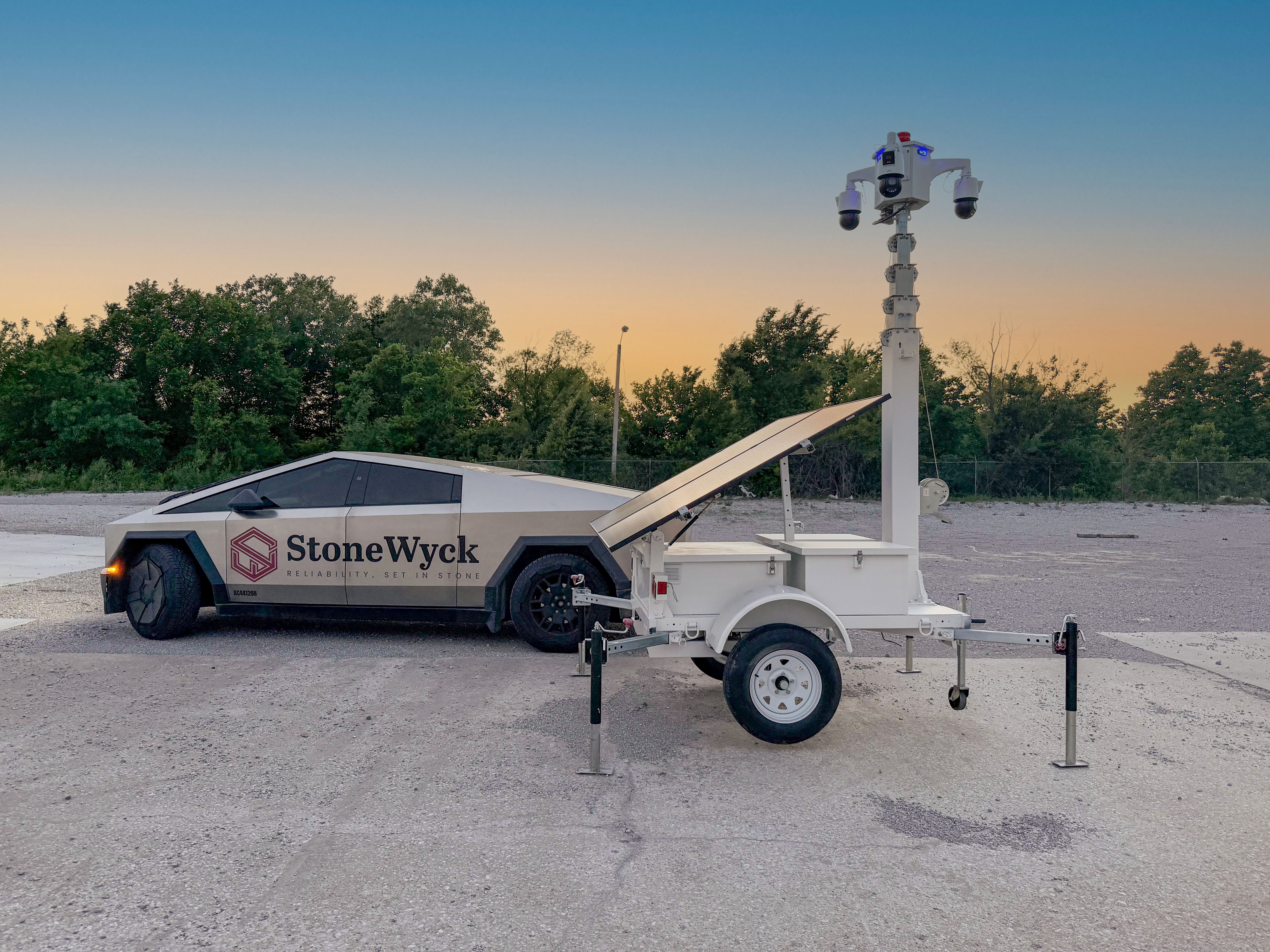
StoneWyck deployed a complete off-grid solar surveillance platform engineered for rapid deployment and active monitoring. On a single pole, the system delivers:
Dual LPR (License Plate Recognition) cameras. Capturing plate data on vehicles entering and exiting useful for everything from access logs to incident investigation.
Active deterrence overview cameras. These aren't passive recorders. When a threat is detected, integrated speaker and strobe response can warn off intruders before an incident escalates moving surveillance from "documenting what happened" to "preventing it."
PTZ tracking camera. Pan-tilt-zoom coverage that can follow activity across a wide area, controlled either by operators or by automated tracking when motion is detected.
Horn speaker for live audio response. Allowing operators to issue verbal warnings or directives in real time.
Intelligent off-grid solar power system. Dual solar panels with battery storage sized for continuous operation including through cloudy days and overnight with power management designed for the load profile of an active surveillance system, not just a single low-draw camera.
The whole platform feeds into the same monitoring path as our wired deployments: video flows to the customer's NVR infrastructure and out to our partner monitoring center for active oversight.
Why It Was Engineered This Way
Three things drove the design:
Speed of deployment. A single pole, a single mount, no trenching, no electrical permits for power runs. The site goes from no coverage to full active surveillance in a fraction of the time a wired install would take.
Active deterrence, not just recording. Cameras that record are evidence. Cameras with integrated audio and strobe response are intervention. Combined with monitoring center oversight, that turns the system into a real deterrent — most incidents end the moment an intruder realizes someone is watching and responding.
True off-grid reliability. Cheap solar setups die the first cloudy week. This system was sized with the actual load and local solar conditions in mind, with battery capacity to ride through extended low-light periods. A surveillance system that goes dark when it's overcast isn't a surveillance system.
Where This Fits
Off-grid solar surveillance is the right answer for sites where:
- Running power and data isn't practical or affordable
- Coverage needs may shift as the site evolves (construction, staging yards, temporary facilities)
- Active monitoring matters more than passive recording
- The goal is deterrence and response, not just documentation
It's also a strong fit for permanent installations on properties large enough that wired infrastructure to the right vantage point would cost more than a self-contained solar system.
This is what modern field surveillance looks like purpose-built, monitored, and deployable almost anywhere.
Got a site that's hard to wire? StoneWyck designs and deploys off-grid surveillance platforms integrated with professional monitoring partners. Contact us to talk through what your site needs.
.png)